Architecting a website builder platform from scratch
Shopvii · Around 2015
- End-to-end
- Architecture, first design to production
- Multi-tenant
- Platform behind every customer site
Context
Shopvii lets a business owner create a website without a developer: sign up, fill in the key information, and have a working site in minutes rather than the days a conventional build takes. It runs on a subscription, and it was built from the first line by my company. I architected it start to end.
Leadership & decisions
Multi-tenant from the first design. A builder platform is not a website; it is a system that manufactures websites. Deciding that up front — rather than generalising a single-site codebase later — is the difference between a platform and a pile of exceptions.
Testing frameworks before committing to them. This had genuinely different requirements from a conventional web application, so we validated frameworks and integrations by testing them at each step rather than choosing on familiarity. Slower to start; far cheaper than discovering a wrong foundation at scale.
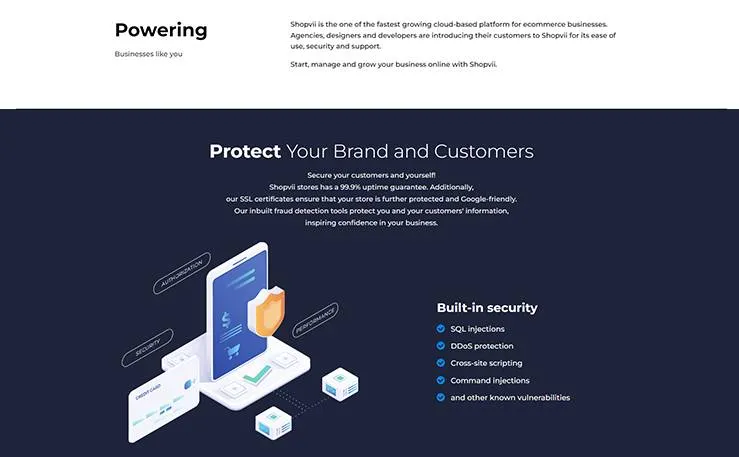
Certificates as an architecture decision, not a feature. Every customer site ships with SSL at no extra charge. That is a provisioning and cost-model decision made once at the platform level, not something a small-business owner should ever have to think about.
The dashboard is the product. For a non-technical owner, the control panel is the platform. Its scope — order management, site alterations, content — was where most of the design effort went, and where the build was hardest.
Outcome
A subscription platform on which a non-technical owner can stand up a device-friendly store with unlimited products and pages, manage orders from a single dashboard, and get SSL as standard.
- PHP
- MySQL
- REST APIs
- Multi-tenant architecture
Last updated: August 2026